
 APMG
APMG
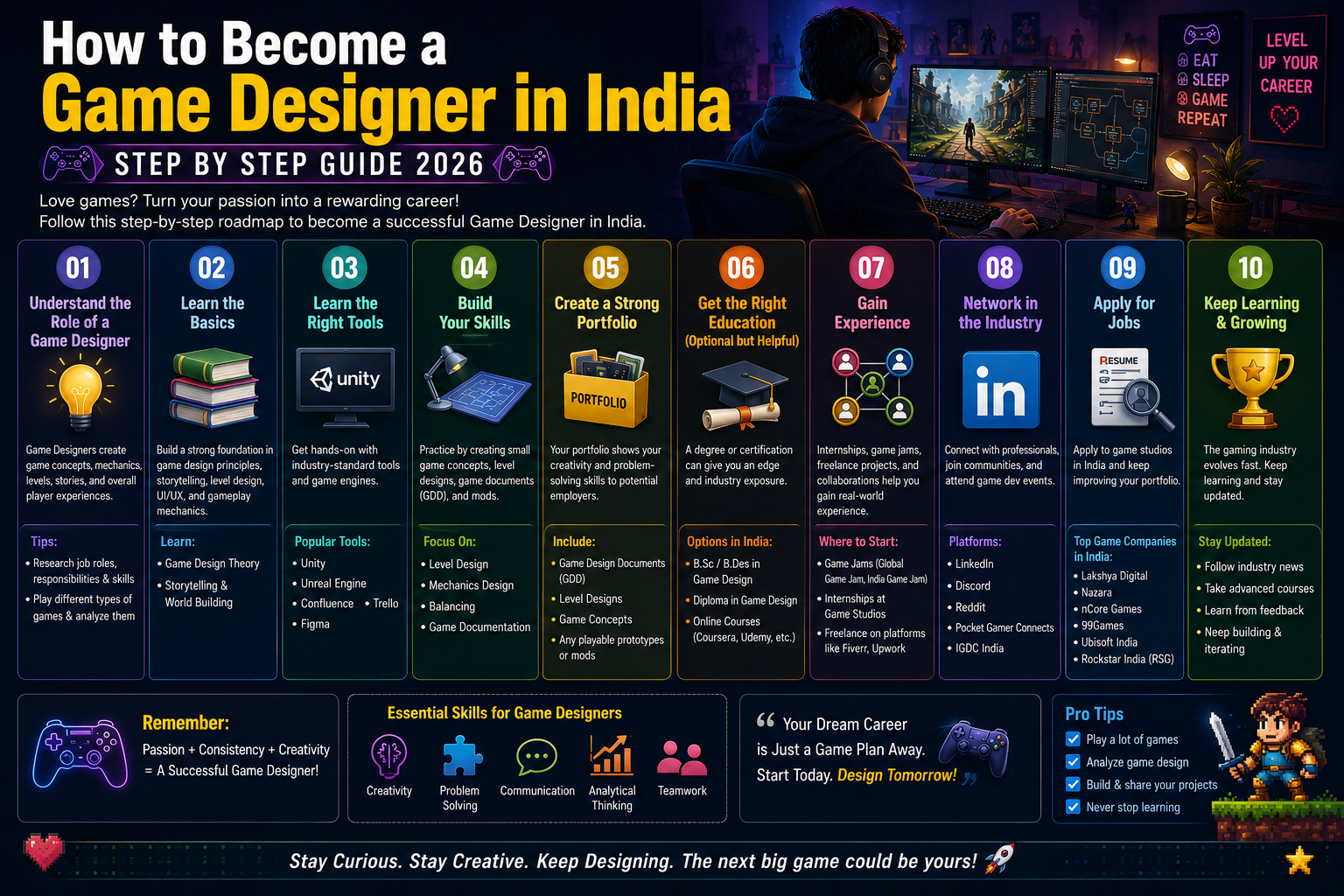
How to Become a Game Designer in India – Step by Step Guide
This guide explains how to become a game designer in India in 2026 through step-by-step learning, skill development, professional courses, portfolio creation, internships, and industry experience. It also covers game design software, salary expectations, career roles, and opportunities in the growing Indian gaming industry.
The gaming industry in India is growing faster than ever. From mobile games and PC titles to esports and virtual reality experiences, gaming has become one of the most exciting career fields for creative students. Many young people who once played games only for entertainment are now turning their passion into a full-time profession. Among the most popular career options in this field is becoming a game designer.
A game designer is the creative mind behind the gameplay, characters, levels, mechanics, missions, and overall player experience in a video game. If you love storytelling, creativity, strategy, and gaming, this career could be perfect for you.
Here is a complete step-by-step guide on how to become a game designer in India in 2026.
What Does a Game Designer Do?
A game designer creates the concept and structure of a game. Their job is not limited to drawing characters or coding. Instead, they design how the game works and feels for players.
Game designers work on:
- Storylines and game concepts
- Character development
- Gameplay mechanics
- Missions and level design
- Rules and objectives
- Player experience
- Balancing game difficulty
They collaborate with artists, animators, programmers, writers, and sound designers to build a complete game.
Step 1: Understand the Basics of Game Design
Before entering this field, it is important to understand what game design actually involves. Many students think game design only means playing games all day, but the reality is very different.
Game design combines:
- Creativity
- Psychology
- Storytelling
- Technology
- Animation
- Programming
- Problem-solving
Start by exploring different game genres such as:
- Action games
- RPG games
- Open-world games
- Sports games
- Puzzle games
- Horror games
- Mobile games
Observe how games are designed, how levels progress, and how players interact with game mechanics.
Step 2: Complete Your School Education
To become a game designer in India, students usually complete their 10+2 education from any stream. Arts, Commerce, and Science students can all enter the gaming industry.
However, subjects like:
- Computer Science
- Multimedia
- Fine Arts
- Mathematics
can be helpful depending on your specialization.
A strong creative mindset matters more than your school stream.
Step 3: Learn Essential Skills
Game designers need a combination of technical and creative skills. You do not need to master everything immediately, but learning the basics is important.
Important Skills for Game Designers
Creativity
You should be able to create original ideas, characters, stories, and gameplay concepts.
Communication
Game designers work in teams, so communication skills are very important.
Problem Solving
You must identify gameplay issues and improve player experience.
Storytelling
Narrative-based games require strong storytelling abilities.
Basic Programming Knowledge
Learning coding basics can help you understand game engines better.
Visual Design Understanding
Knowledge of colors, composition, and user interface design is useful.
Step 4: Join a Game Design Course
Professional training can help students learn industry-standard software, workflows, and techniques. Many institutes in India now offer specialized game design programs.
Popular courses include:
- Diploma in Game Design
- Bachelor’s Degree in Game Design
- Animation and Game Design Courses
- Game Art and Development Programs
- Certificate Courses in Gaming
Students learn:
- Game mechanics
- Character design
- UI/UX
- 3D modeling
- Game engines
- Storyboarding
- Level design
Practical training is extremely important in this field.
Step 5: Learn Game Design Software and Tools
Modern game development relies heavily on software and game engines. Learning these tools can significantly improve your career opportunities.
Popular Game Design Tools
Unity
One of the most popular game engines for mobile and indie games.
Unreal Engine
Widely used for high-quality PC and console games.
Blender
Used for 3D modeling and animation.
Maya
Industry-standard software for 3D design and animation.
Photoshop
Useful for textures, concept art, and UI design.
Figma
Used for user interface and experience design.
You do not need to master every tool at once. Start with beginner-friendly platforms and gradually improve.
Step 6: Build Your Portfolio
A strong portfolio is one of the most important things for becoming a game designer. Companies care more about your skills and creativity than just certificates.
Your portfolio can include:
- Game concepts
- Character sketches
- Level designs
- Gameplay prototypes
- Mobile games
- UI designs
- Storyboards
Even small projects matter.
Try creating:
- A simple 2D mobile game
- Puzzle game concepts
- Interactive storytelling demos
- Multiplayer game ideas
Upload your work on platforms like:
- Behance
- ArtStation
- GitHub
A portfolio shows employers your practical abilities.
Step 7: Practice by Creating Small Games
The best way to learn game design is by actually designing games.
Start small:
- Build mini-games
- Recreate simple mechanics
- Participate in game jams
- Work on student projects
- Join online gaming communities
Game jams are excellent learning experiences where developers create games within limited time periods.
You learn:
- Teamwork
- Deadlines
- Creativity under pressure
- Real development challenges
Every project improves your confidence and experience.
Step 8: Apply for Internships
Internships help students gain real industry exposure. Many gaming companies in India hire interns for:
- Game testing
- Level design
- QA testing
- UI design
- Storyboarding
Internships teach:
- Industry workflows
- Team collaboration
- Professional software usage
- Game production pipelines
Even unpaid internships can provide valuable experience early in your career.
Step 9: Explore Career Opportunities
The gaming industry offers multiple career paths beyond just “game designer.”
Popular Career Roles
Game Designer
Designs gameplay systems and mechanics.
Level Designer
Creates maps, environments, and missions.
Narrative Designer
Focuses on storytelling and dialogue.
UI/UX Designer
Improves player interaction and interface design.
Game Artist
Designs characters, environments, and visual assets.
Game Tester
Tests games for bugs and gameplay issues.
Indie Game Developer
Creates independent games for platforms like Steam and mobile stores.
The Indian gaming market is expanding rapidly, creating opportunities in both startups and large studios.
Step 10: Stay Updated With Gaming Trends
Gaming evolves constantly. New technologies like:
- Artificial Intelligence
- Virtual Reality (VR)
- Augmented Reality (AR)
- Metaverse gaming
- Cloud gaming
are changing the industry quickly.
Successful game designers continue learning throughout their careers.
Follow:
- Gaming conferences
- Developer blogs
- Game design YouTube channels
- Industry news
- Online communities
Analyzing successful games can also improve your design understanding.
Salary of a Game Designer in India
Game designer salaries in India depend on skills, experience, and company size.
Average Salary Range in 2026
- Fresher: ₹3 LPA to ₹6 LPA
- Mid-level: ₹8 LPA to ₹15 LPA
- Senior Designers: ₹20 LPA or more
Freelance designers and indie developers can also earn through:
- Mobile game publishing
- Steam releases
- NFT gaming projects
- Contract work
Talented designers with strong portfolios often grow quickly in this industry.
Top Companies Hiring Game Designers in India
Some major gaming and entertainment companies include:
- Ubisoft
- Rockstar Games India
- Nazara Technologies
- Zynga
- Electronic Arts (EA)
- Dream11
- MPL
- SuperGaming
India’s startup ecosystem is also creating many opportunities for young designers.
Is Game Design a Good Career in India?
Yes, game design is becoming one of the most exciting creative careers in India. The gaming audience is growing every year, especially with mobile gaming and esports becoming mainstream.
Reasons why students choose game design:
- Creative freedom
- High industry growth
- International opportunities
- Good salary potential
- Work on exciting projects
- Blend of art and technology
However, success requires dedication, continuous learning, and practical experience.
Final Thoughts
Becoming a game designer in India is no longer an impossible dream. The gaming industry now offers real career opportunities for creative and passionate students. Whether you want to design action games, story-driven adventures, mobile games, or multiplayer worlds, there is space for new talent in this industry.
Start by learning the basics, improving your skills, practicing with small projects, and building a strong portfolio. Focus on creativity, consistency, and hands-on experience rather than rushing for instant success.
With the right training and dedication, you can turn your love for gaming into a successful and rewarding career in 2026 and beyond.
FAQs
1. What qualifications are needed to become a game designer in India?
Students can pursue game design after completing 10+2 from any stream. Professional courses in game design, animation, or multimedia are highly beneficial.
2. Which skills are important for a game designer?
Creativity, storytelling, problem-solving, communication, level design, and basic knowledge of game engines like Unity or Unreal Engine are important skills.
3. What is the average salary of a game designer in India?
Freshers can earn around ₹3–6 LPA, while experienced game designers may earn ₹15–20 LPA or more depending on their skills and company.
4. Which software is commonly used in game design?
Popular tools include Unity, Unreal Engine, Blender, Maya, Photoshop, and Figma for designing games and game assets.
5. Is game design a good career option in India in 2026?
Yes, the Indian gaming industry is growing rapidly with opportunities in mobile gaming, esports, AR/VR, and indie game development.


