
 APMG
APMG
What is a CGI Artist and How Do I Become a CGI Artist?
Discover the role of a CGI Artist, industries hiring CGI professionals, essential skills, salary expectations, career growth opportunities, and a complete roadmap to start a successful CGI career in India.
The entertainment, gaming, advertising, and digital media industries have witnessed a massive transformation over the last decade. From breathtaking visual effects in movies to realistic characters in video games and stunning product advertisements, Computer-Generated Imagery (CGI) has become an essential part of modern digital content creation. Behind these visually impressive creations are skilled professionals known as CGI Artists.
If you have ever wondered who creates lifelike animated characters, fantasy worlds, or realistic visual effects seen in films and advertisements, the answer is CGI artists. This career combines creativity, technology, and storytelling, making it one of the most exciting professions in the animation and visual effects industry.
In this blog, we will explore what a CGI artist does, the skills required, career opportunities, salary prospects, and how you can become a CGI artist in India in 2026.
What is CGI?
CGI stands for Computer-Generated Imagery. It refers to the use of computer software to create images, animations, visual effects, and 3D models. CGI is widely used in:
- Films and TV shows
- Video games
- Advertisements
- Architectural visualization
- Product design
- Virtual reality (VR)
- Augmented reality (AR)
- Medical simulations
- Educational content
CGI can create anything from a simple animated object to entire digital worlds that look incredibly realistic.
Who is a CGI Artist?
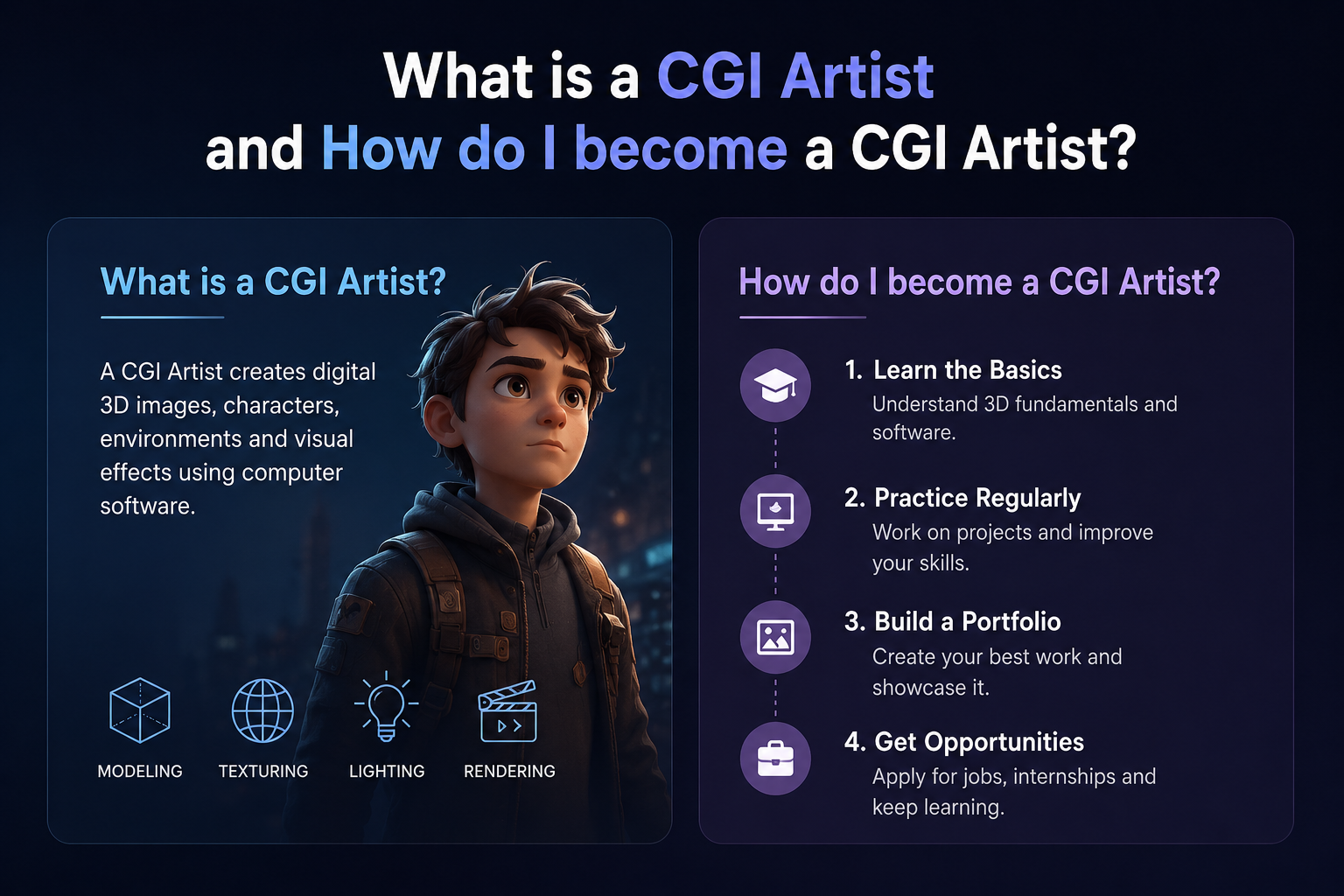
A CGI Artist is a creative professional who uses specialized software to create digital images, animations, visual effects, and 3D assets. Their job is to transform ideas, concepts, and stories into visually appealing digital content.
CGI artists work across various stages of production, including modeling, texturing, lighting, animation, rendering, and compositing. Depending on their specialization, they may focus on creating characters, environments, special effects, or motion graphics.
Their work plays a vital role in bringing imagination to life through digital media.
What Does a CGI Artist Do?
The responsibilities of a CGI artist vary depending on the industry and project. Some common tasks include:
Creating 3D Models
CGI artists design and build digital objects, characters, props, and environments using 3D software.
Texturing and Shading
They apply colors, materials, and surface details to make models look realistic or stylized.
Lighting Scenes
Proper lighting is essential for creating mood, depth, and realism in CGI projects.
Animation
Some CGI artists animate characters, objects, and environments to create movement and storytelling.
Visual Effects Creation
They develop effects such as explosions, smoke, fire, water, magic spells, and weather simulations.
Rendering
Rendering converts 3D scenes into final images or videos that audiences can see.
Collaboration
CGI artists often work closely with directors, animators, game developers, and VFX supervisors to ensure project goals are achieved.
Types of CGI Artists
The field of CGI is broad, and professionals often specialize in specific areas.
3D Modeling Artist
Creates digital models of characters, vehicles, buildings, and props.
Character Artist
Focuses on designing and sculpting realistic or stylized characters.
Texture Artist
Applies textures and materials to make 3D models visually appealing.
Lighting Artist
Handles scene lighting and creates realistic visual atmospheres.
Environment Artist
Builds landscapes, cities, forests, and digital worlds.
Animation Artist
Creates movement and character performances.
VFX Artist
Develops visual effects such as explosions, particles, fire, and simulations.
Compositing Artist
Combines multiple visual elements into a final polished scene.
Industries That Hire CGI Artists
CGI artists are in demand across multiple industries.
Film and Entertainment
Movies and OTT platforms extensively use CGI for visual effects and animation.
Gaming Industry
Game developers require CGI artists to create characters, environments, and assets.
Advertising
Brands use CGI to produce engaging commercials and product visualizations.
Architecture
Architectural firms create realistic 3D visualizations of buildings and interiors.
Automotive Industry
Manufacturers use CGI for vehicle design presentations and marketing campaigns.
E-Commerce
Product visualization helps online retailers showcase products realistically.
Virtual Reality and Augmented Reality
VR and AR experiences rely heavily on CGI-generated environments and objects.
Essential Skills Required to Become a CGI Artist
Success as a CGI artist requires a combination of artistic and technical skills.
Creativity
The ability to imagine and create unique visual concepts is fundamental.
Drawing and Design Knowledge
Understanding composition, perspective, color theory, and anatomy helps create better visuals.
3D Modeling Skills
Knowledge of creating digital assets is essential.
Animation Principles
Understanding movement, timing, and storytelling improves project quality.
Problem-Solving Ability
Artists frequently face technical challenges and must find creative solutions.
Attention to Detail
Small details often make CGI work look realistic and professional.
Communication Skills
Collaboration is a key part of production pipelines.
Software Proficiency
Mastering industry-standard software significantly increases employability.
Popular Software Used by CGI Artists
Professional CGI artists commonly use:
- Autodesk Maya
- Blender
- Autodesk 3ds Max
- ZBrush
- Houdini
- Cinema 4D
- Adobe After Effects
- Adobe Photoshop
- Substance Painter
- Unreal Engine
- Unity
Many beginners start with Blender because it is free and offers powerful professional-level tools.
How to Become a CGI Artist in India
Step 1: Complete Your Education
You can pursue CGI after completing Class 12 from any stream. While a degree can be beneficial, employers often focus more on skills and portfolios.
Step 2: Learn CGI Fundamentals
Start by understanding:
- 3D modeling
- Animation basics
- Texturing
- Lighting
- Rendering
- Visual storytelling
Online tutorials, certification programs, and professional training institutes can help build a strong foundation.
Step 3: Master Industry Software
Choose one primary software and become proficient before learning additional tools.
For beginners:
- Blender
- Maya
- Photoshop
For advanced learning:
- Houdini
- Unreal Engine
- Substance Painter
Step 4: Build a Strong Portfolio
A portfolio is often more important than a degree.
Include:
- Character models
- Environment designs
- Animation projects
- Visual effects shots
- Personal creative projects
Employers evaluate your practical abilities through your portfolio.
Step 5: Gain Real-World Experience
Work on:
- Freelance projects
- Student films
- Internships
- Independent game projects
- Collaborative online projects
Practical experience helps you understand professional workflows.
Step 6: Learn Industry Pipelines
Understanding how production teams work together is crucial. Learn the complete CGI workflow from concept to final rendering.
Step 7: Apply for Entry-Level Roles
Popular beginner positions include:
- Junior CGI Artist
- 3D Modeler
- Texture Artist
- Lighting Artist
- VFX Intern
- Motion Graphics Artist
These roles provide valuable industry exposure and growth opportunities.
Salary of a CGI Artist in India
CGI artist salaries vary depending on skills, location, specialization, and company.
Entry-Level CGI Artist
- ₹3 LPA to ₹6 LPA
Mid-Level CGI Artist
- ₹6 LPA to ₹12 LPA
Senior CGI Artist
- ₹12 LPA to ₹25 LPA or more
Freelance CGI Artists
Freelancers can earn significantly more depending on project complexity and client base.
Professionals working with international clients often command premium rates.
Career Growth Opportunities
The CGI field offers multiple career advancement paths.
You can progress to:
- Senior CGI Artist
- Lead Artist
- VFX Supervisor
- Art Director
- Technical Director
- Creative Director
- Animation Director
- Studio Founder
As technology evolves, demand for skilled CGI professionals continues to increase.
Future Scope of CGI Artists in 2026 and Beyond
The future looks highly promising for CGI artists due to the growth of:
- Streaming platforms
- Gaming industry
- Metaverse experiences
- Virtual production
- AI-assisted content creation
- Augmented reality applications
- Virtual reality experiences
Studios are constantly seeking artists who can create immersive digital experiences. With advancements in technology, CGI skills are becoming valuable across industries beyond entertainment.
Challenges of Being a CGI Artist
While rewarding, the profession also comes with challenges.
- Tight project deadlines
- Continuous software updates
- Long rendering times
- High attention to detail
- Constant learning requirements
However, passionate artists often find these challenges worthwhile due to the creative satisfaction and career opportunities available.
Conclusion
A CGI Artist is a digital creator who brings imagination to life through computer-generated visuals, animations, and effects. From blockbuster films and video games to advertisements and virtual reality experiences, CGI artists play a crucial role in shaping modern digital entertainment.
If you enjoy art, technology, storytelling, and visual creativity, becoming a CGI artist can be an exciting and rewarding career choice. By learning industry-standard software, developing strong artistic skills, building an impressive portfolio, and gaining practical experience, you can establish a successful career in the rapidly growing CGI industry.
As the demand for digital content continues to rise in 2026 and beyond, skilled CGI artists will remain highly sought-after professionals across multiple industries worldwide.
FAQs
1. What does a CGI Artist do?
A CGI Artist creates computer-generated images, animations, visual effects, and 3D models for movies, video games, advertisements, television, and digital media. They use specialized software to design realistic or stylized digital content.
2. Which software should I learn to become a CGI Artist?
Popular CGI software includes Blender, Autodesk Maya, 3ds Max, ZBrush, Houdini, Cinema 4D, Substance Painter, and Unreal Engine. Beginners often start with Blender due to its free availability and powerful features.
3. Do I need a degree to become a CGI Artist?
No, a degree is not mandatory. Most employers focus on your skills, portfolio, and practical experience. Professional training, certifications, and a strong portfolio can help you secure jobs in the industry.
4. What is the salary of a CGI Artist in India?
Entry-level CGI Artists typically earn between ₹3 lakh and ₹6 lakh per annum. Experienced professionals can earn ₹12 lakh to ₹25 lakh per annum or more, depending on their specialization and expertise.
5. Is CGI a good career option in 2026?
Yes, CGI is a promising career due to increasing demand in animation, gaming, VFX, advertising, virtual reality, and OTT content production. As digital content consumption continues to grow, skilled CGI Artists are expected to have strong career opportunities.


