
 APMG
APMG
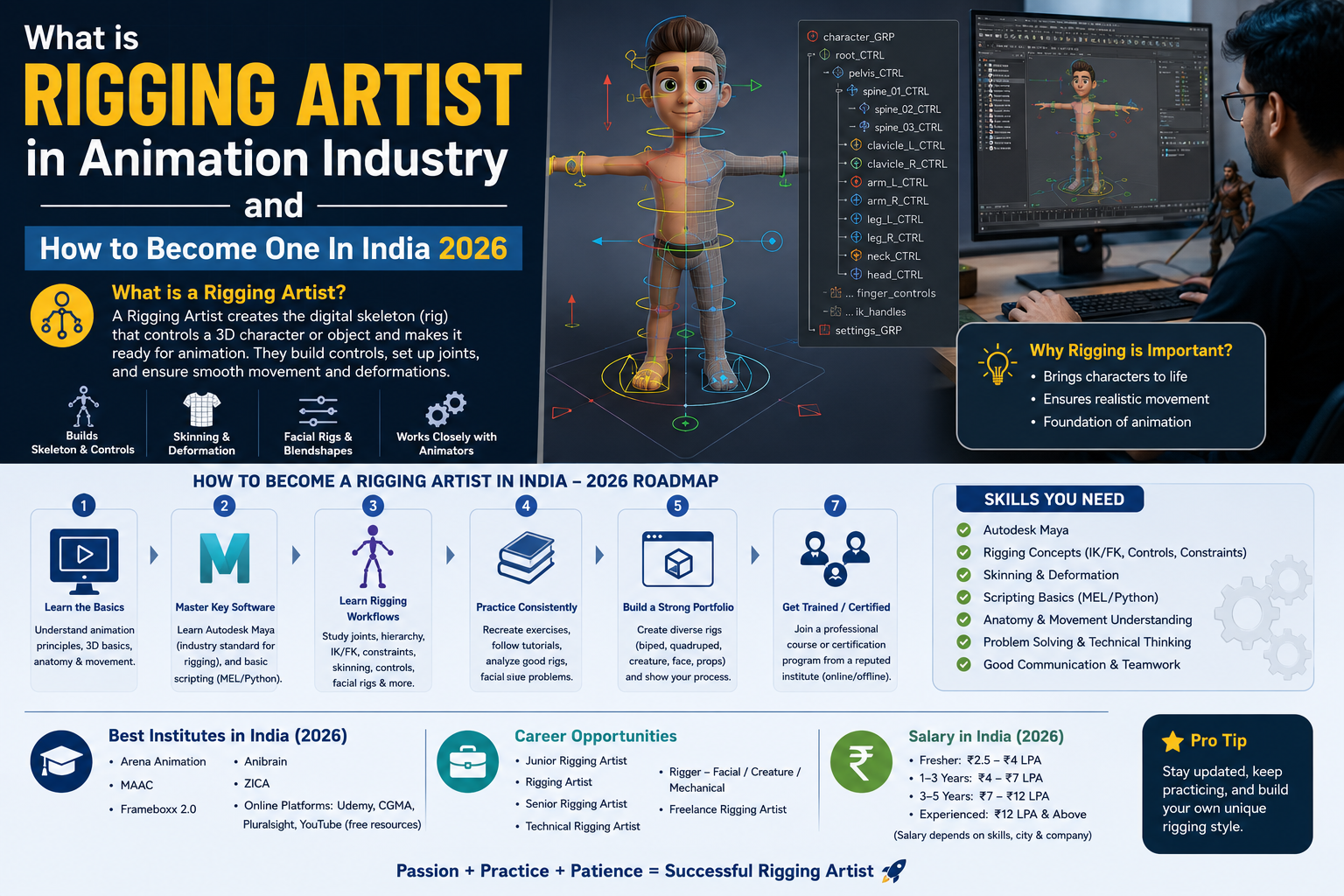
What is a Rigging Artist in the Animation Industry and How to Become One in India
Discover the role of a Rigging Artist in the animation industry, essential skills, software, salary, career scope, and step-by-step guidance to become a successful rigging professional in India in 2026.
The animation industry has evolved tremendously over the past decade, creating exciting career opportunities for creative and technical professionals alike. Among the many specialized roles in animation production, the Rigging Artist plays a crucial part in bringing animated characters and objects to life. Whether it's a character in an animated movie, a game hero, or a visual effects creature in a blockbuster film, none of them can move realistically without proper rigging.
As India's animation, VFX, gaming, and digital content industries continue to grow rapidly in 2026, the demand for skilled rigging artists is increasing across studios and production houses. If you enjoy both technology and creativity, a career in rigging can be highly rewarding.
In this guide, we'll explore what a Rigging Artist does, the skills required, career opportunities, salary expectations, and how you can become one in India.
What is a Rigging Artist?
A Rigging Artist is a professional responsible for creating the digital skeleton and control systems that allow 3D characters, creatures, props, and objects to move naturally in animation.
Think of a rigging artist as the person who builds the internal structure of a digital character. Just as the human body has bones, joints, and muscles that enable movement, a rigging artist creates a virtual version of these systems inside a 3D model.
Once the rig is complete, animators can use the controls to make characters walk, run, jump, smile, talk, or perform complex actions without manually moving every part of the model.
Without rigging, a beautifully designed character would remain a static object with no ability to move.
Why is Rigging Important in Animation?
Rigging serves as the bridge between modeling and animation. It transforms a static 3D model into an animation-ready character.
The importance of rigging includes:
- Enabling realistic character movements
- Creating efficient animation workflows
- Improving production speed
- Maintaining consistency across scenes
- Supporting complex facial expressions
- Enhancing game character interactions
- Facilitating visual effects simulations
From animated films and television shows to gaming projects and VFX productions, rigging is an essential part of the production pipeline.
Roles and Responsibilities of a Rigging Artist
A rigging artist performs various technical and creative tasks throughout the production process.
Creating Skeleton Structures
The primary responsibility is designing bone structures for characters and objects. These digital skeletons determine how a character moves.
Building Control Systems
Rigging artists create user-friendly controls that animators use to manipulate characters efficiently.
Skinning and Weight Painting
This process connects the character mesh to the skeleton. Proper skinning ensures realistic deformation when joints bend and move.
Facial Rigging
Modern animation requires detailed facial expressions. Rigging artists create advanced facial controls for emotions, lip-syncing, and subtle character performances.
Scripting and Automation
Many rigging artists use scripting languages such as Python or MEL to automate repetitive tasks and improve productivity.
Testing and Troubleshooting
Before handing over the rig to animators, rigging artists test movement systems and fix any technical issues.
Collaboration with Teams
Rigging artists work closely with:
- 3D Modelers
- Texture Artists
- Animators
- Technical Directors
- VFX Artists
- Game Developers
Their role requires constant communication to ensure smooth production workflows.
Skills Required to Become a Rigging Artist
To succeed in this field, aspiring professionals need a combination of artistic understanding and technical expertise.
Understanding of Human and Animal Anatomy
Knowledge of anatomy helps create realistic movement systems and character deformations.
3D Software Proficiency
Rigging artists must be comfortable using industry-standard software such as:
- Autodesk Maya
- Blender
- 3ds Max
- Houdini
- Cinema 4D
Among these, Maya remains the most widely used software for professional rigging.
Knowledge of Animation Principles
Understanding how movement works helps rigging artists build controls that support realistic animation.
Problem-Solving Skills
Every character presents unique challenges. Rigging artists must develop creative technical solutions for complex movement requirements.
Scripting Knowledge
Learning Python significantly increases career opportunities because studios increasingly rely on automation.
Attention to Detail
Small rigging mistakes can cause major animation issues. Precision and testing are essential.
Communication Skills
Rigging artists frequently collaborate with multiple departments and must communicate technical concepts clearly.
Software Used by Rigging Artists in 2026
Technology continues to evolve, but several tools remain industry standards.
Autodesk Maya
Maya is the leading software used in film, gaming, and animation studios worldwide.
Blender
Blender has become increasingly popular due to its powerful rigging tools and open-source ecosystem.
Houdini
Houdini is widely used for procedural rigging and advanced technical workflows.
Unreal Engine
Game studios increasingly integrate rigging workflows directly into Unreal Engine pipelines.
Python
Python scripting is becoming a mandatory skill for advanced rigging positions.
How to Become a Rigging Artist in India in 2026
Step 1: Complete Your Education
Students can pursue:
- 10+2 from any stream
- Bachelor's degree in animation, multimedia, computer graphics, or design
- Specialized animation certification courses
While a formal degree helps, studios often prioritize skills and portfolios over academic qualifications.
Step 2: Learn 3D Animation Fundamentals
Before focusing on rigging, understand:
- Modeling
- Texturing
- Lighting
- Animation basics
- Production pipelines
A strong foundation improves rigging quality.
Step 3: Master Rigging Tools
Learn rigging using software like:
- Maya
- Blender
- Houdini
Practice creating rigs for:
- Human characters
- Animals
- Cartoon characters
- Mechanical objects
Step 4: Learn Python Scripting
Python knowledge can significantly improve employability and salary potential.
Focus on:
- Basic programming concepts
- Maya Python scripting
- Automation tools
- Custom rigging systems
Step 5: Build a Strong Portfolio
A portfolio is the most important factor during hiring.
Include:
- Biped rigs
- Quadruped rigs
- Facial rigs
- Mechanical rigs
- Custom tools and scripts
- Demonstration videos
Show both technical complexity and usability.
Step 6: Gain Industry Experience
Apply for:
- Internships
- Freelance projects
- Studio trainee programs
Real-world experience helps you understand production requirements.
Step 7: Stay Updated
The animation industry evolves rapidly.
Continue learning:
- AI-assisted workflows
- Real-time animation systems
- Procedural rigging
- Advanced scripting
- Game engine integration
Continuous learning is essential for long-term growth.
Career Opportunities for Rigging Artists in India
The demand for rigging professionals is growing across multiple industries.
Animation Studios
Rigging artists work on:
- Animated films
- TV series
- Web content
- Educational animations
Gaming Industry
Game developers require rigging experts for:
- Character development
- Creature design
- Motion systems
- Interactive gameplay mechanics
VFX Industry
Visual effects studios use rigging artists for:
- Digital doubles
- Creatures
- Simulation setups
- CGI characters
Advertising and Media
Brands increasingly use 3D animation for marketing campaigns and digital storytelling.
Freelancing
Many rigging artists work independently for clients across the globe through remote projects.
Salary of a Rigging Artist in India (2026)
Salary depends on experience, software expertise, portfolio quality, and company size.
Entry-Level Rigging Artist
Experience: 0–2 Years
Salary: ₹3.5 LPA to ₹6 LPA
Mid-Level Rigging Artist
Experience: 3–5 Years
Salary: ₹6 LPA to ₹12 LPA
Senior Rigging Artist
Experience: 5–10 Years
Salary: ₹12 LPA to ₹20 LPA+
Technical Director (Rigging)
Experience: 8+ Years
Salary: ₹20 LPA to ₹40 LPA+
Professionals with strong scripting skills and experience in international productions often earn significantly higher salaries.
Future Scope of Rigging Artists in India
India's Animation, VFX, Gaming, and Comics (AVGC) sector is expanding rapidly. With increasing investments in gaming, OTT content, virtual production, and digital entertainment, skilled rigging artists are expected to remain in high demand throughout the coming years.
Emerging technologies such as:
- Virtual Reality (VR)
- Augmented Reality (AR)
- Metaverse applications
- Real-time rendering
- AI-assisted animation
are creating new opportunities for rigging professionals.
As production pipelines become more advanced, studios will increasingly seek artists who can combine rigging expertise with programming and automation skills.
Conclusion
Rigging is one of the most important yet often overlooked disciplines in the animation pipeline. A Rigging Artist transforms static 3D models into dynamic, animation-ready characters that can express emotions, perform actions, and engage audiences.
For students who enjoy both creativity and technical problem-solving, rigging offers a stable, rewarding, and future-focused career path. By learning industry-standard software, mastering scripting, building a strong portfolio, and gaining practical experience, aspiring professionals can establish successful careers in India's growing animation and VFX industry.
As the AVGC sector continues to flourish in 2026 and beyond, skilled rigging artists will play an increasingly vital role in shaping the future of digital entertainment.


