
 VFX Course in Delhi
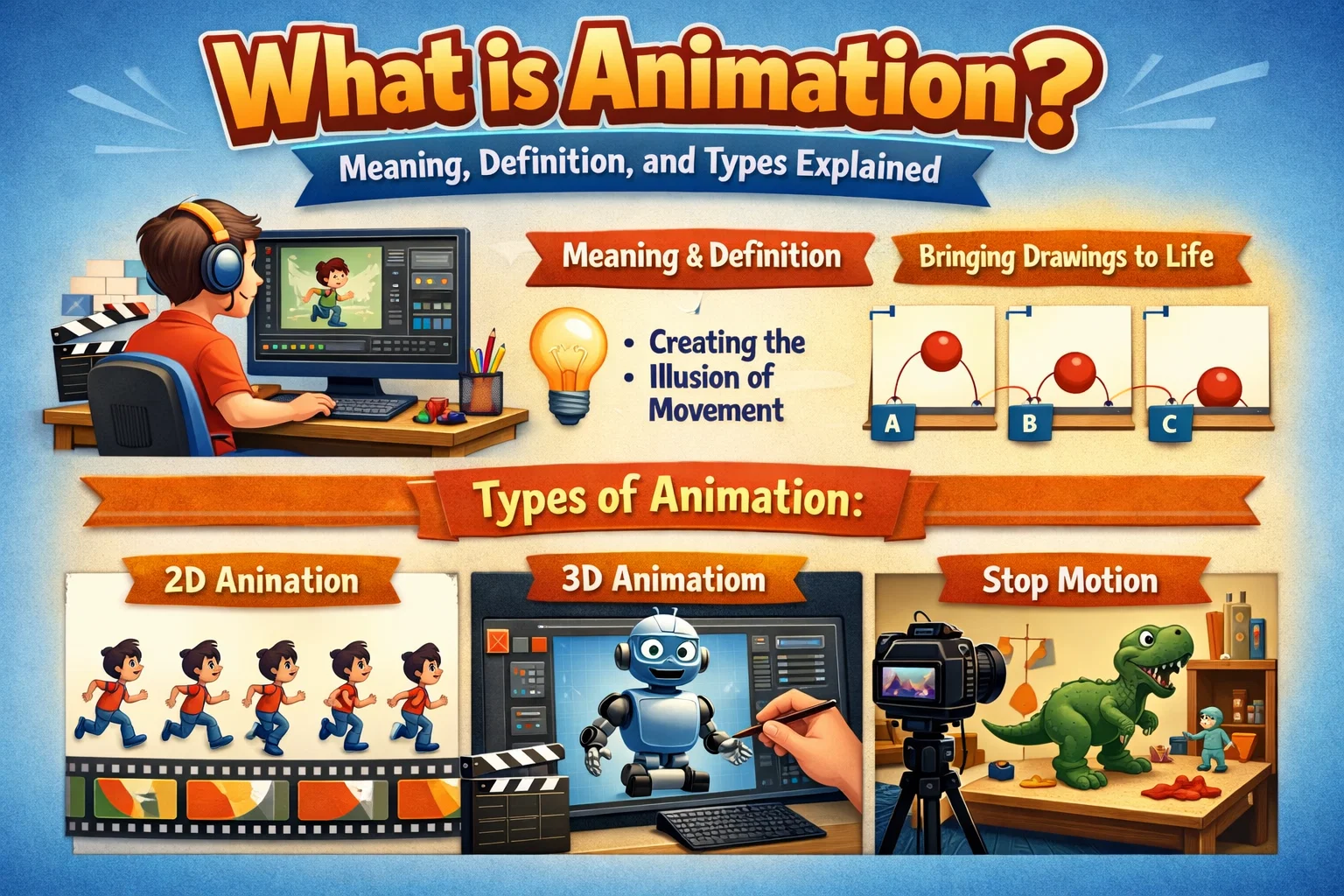
What is Animation? Meaning, Definition, and Types Explained
Animation is the process of creating the illusion of movement by displaying a sequence of images rapidly. It is widely used in films, television, video games, advertising, education, and digital media. This guide explains what animation is, its meaning, definition, and major types, including traditional animation, 2D animation, 3D animation, stop motion animation, and motion graphics. The article also covers how animation works, its applications, and why it is an important part of modern visual storytelling.
Animation is everywhere today — from movies and TV shows to advertisements, video games, social media content, and educational videos. Whether it’s a Disney movie, a YouTube explainer video, or a mobile game character moving on screen, animation plays a huge role in modern digital storytelling.
But many people still wonder: What exactly is animation? How does it work? And what are the different types of animation?
In this guide, we’ll explain animation meaning, definition, and types in simple terms. By the end, you’ll understand how animation works and the various forms used in films, games, education, and digital media.
What is Animation?
Animation Meaning
Animation is the technique of creating the illusion of movement by displaying a sequence of images rapidly. Each image is slightly different from the previous one, and when shown quickly, our eyes perceive them as continuous motion.
In simple words, animation brings still images to life.
For example, when you watch a cartoon character running, what you’re actually seeing is hundreds or thousands of slightly different drawings shown quickly one after another.
This technique tricks the human brain into seeing movement where none actually exists.
What is Animation Definition?
Animation can be defined as:
“The process of creating motion and change by rapidly displaying a sequence of static images, frames, or objects.”
Each image used in animation is called a frame. When multiple frames are played together at a certain speed (usually 24–30 frames per second), they create smooth movement.
Animation can be created using:
- Hand-drawn images
- Computer graphics
- Photographs of objects
- Digital illustrations
- 3D models
Because of technological advancements, animation today is widely used across many industries including film, gaming, advertising, education, marketing, and web design.
How Animation Works
Before understanding the different types of animation, it's important to know how animation actually works.
Animation is based on a concept called Persistence of Vision. This is the ability of the human eye to retain an image for a fraction of a second even after it disappears.
When multiple images are shown quickly, the brain connects them and perceives them as a moving image.
For example:
- 24 images per second = smooth animation
- 12 images per second = basic animation
This is why animated movies consist of thousands of frames to create smooth motion.
Key Elements of Animation
To create effective animation, several elements are involved.
Frames
A frame is a single still image used in an animation sequence.
Frame Rate
Frame rate refers to how many frames appear per second. Higher frame rates create smoother animations.
Keyframes
Keyframes represent the most important positions of a moving object.
In-between Frames
These are frames created between keyframes to make movement smoother.
Motion
Movement is created by gradually changing the position, shape, or appearance of objects between frames.
These elements together form the foundation of animation.
Types of Animation
There are several types of animation used in movies, games, and digital media. Each type has its own techniques and tools.
1. Traditional Animation


Traditional animation, also known as cel animation, is the oldest form of animation.
In this method, artists draw each frame by hand on transparent sheets called cels. These drawings are then photographed and played in sequence to create movement.
This technique was widely used in early animated films.
Examples of traditional animation
- Classic Disney movies
- Early cartoon series
- Old animated television shows
Characteristics
- Hand-drawn frames
- Time-consuming process
- Highly artistic and detailed
Although traditional animation is less common today, it remains an important part of animation history.
2. 2D Animation


2D animation involves creating movement in a two-dimensional space, meaning characters and objects only have height and width.
Modern 2D animation is usually created using computer software rather than hand drawing every frame.
Popular 2D animation tools
- Adobe Animate
- Toon Boom Harmony
- After Effects
Examples of 2D animation
- Animated TV shows
- Explainer videos
- Educational animations
- Mobile app animations
Advantages
- Faster production than traditional animation
- Ideal for marketing and online videos
- Lower production cost
2D animation remains extremely popular for YouTube videos, advertisements, and educational content.
3. 3D Animation


3D animation creates characters and environments in a three-dimensional digital space. Objects have height, width, and depth.
Instead of drawing frames, artists create 3D models and animate them using specialized software.
Popular 3D animation software
- Blender
- Autodesk Maya
- Cinema 4D
- 3ds Max
Examples of 3D animation
- Animated movies
- Video games
- Virtual reality
- Architectural visualization
Advantages
- Highly realistic visuals
- Dynamic camera movement
- Reusable character models
3D animation is widely used in modern animated films and gaming industries.
4. Stop Motion Animation

Stop motion animation is created by photographing real objects frame by frame while slightly moving them between each shot.
When these images are played in sequence, the objects appear to move.
Types of stop motion
- Claymation
- Puppet animation
- Object animation
- Cut-out animation
Examples
- Clay animation movies
- Stop-motion TV shows
- Creative advertising videos
Stop motion animation is known for its unique handcrafted look and artistic style.
5. Motion Graphics


Motion graphics animation focuses on moving text, shapes, and graphic elements rather than characters.
It is commonly used in:
- Advertising
- Social media videos
- Corporate presentations
- News graphics
Motion graphics often combine animation, typography, and visual effects to deliver information clearly.
Software used
- Adobe After Effects
- Cinema 4D
- Blender
This type of animation is extremely popular in digital marketing and online content creation.
Applications of Animation
Animation is used in many industries today.
Film and Television
Animated movies and TV shows rely heavily on animation techniques.
Gaming
Video games use animation to create characters, environments, and actions.
Advertising
Brands use animated videos to explain products and services.
Education
Animation helps explain complex topics in a simple and engaging way.
Social Media
Short animated videos attract attention and increase engagement online.
Because of these applications, animation has become a powerful tool for communication and storytelling.
Advantages of Animation
Animation offers several benefits compared to traditional video content.
Easy storytelling
Complex ideas can be explained visually.
Creative freedom
Artists can create imaginary worlds and characters.
Engaging content
Animated visuals capture audience attention quickly.
Reusable assets
Characters and models can be reused multiple times.
These advantages make animation a valuable tool for businesses, educators, and creators.
Future of Animation
The animation industry is growing rapidly due to new technologies.
Emerging trends include:
- Artificial Intelligence in animation
- Virtual reality animation
- Real-time rendering
- Interactive animated content
With the rise of streaming platforms, gaming, and digital marketing, the demand for animation professionals continues to increase worldwide.
Conclusion
Animation is the art and technique of creating the illusion of movement using a sequence of images. From traditional hand-drawn cartoons to advanced 3D digital films, animation has evolved into a powerful storytelling medium.
Understanding animation meaning, definition, and types helps us appreciate the creativity and technology behind animated content.
Whether it’s traditional animation, 2D animation, 3D animation, stop motion, or motion graphics, each type plays a unique role in the entertainment and digital media industry.
As technology continues to advance, animation will become even more immersive, creative, and widely used across multiple industries.
FAQs
1. What is animation in simple words?
Animation is the process of creating the illusion of movement by showing a sequence of images rapidly so they appear to move.
2. What is the definition of animation?
Animation is the technique of displaying a series of images or frames in quick succession to create motion and visual change.
3. What are the main types of animation?
The main types include traditional animation, 2D animation, 3D animation, stop motion animation, and motion graphics.
4. What is 2D animation?
2D animation creates movement in a two-dimensional space using characters and objects that have height and width but no depth.
5. What is 3D animation?
3D animation uses computer-generated models that move in a three-dimensional digital environment with height, width, and depth.
6. Where is animation used?
Animation is used in movies, TV shows, video games, advertising, education, websites, and social media content.
7. What software is used for animation?
Popular animation software includes Adobe Animate, Blender, Autodesk Maya, Cinema 4D, and Toon Boom Harmony.
8. What is stop motion animation?
Stop motion animation is created by photographing real objects frame by frame while moving them slightly between shots.
9. Why is animation important?
Animation helps explain complex ideas visually, makes content more engaging, and improves storytelling.
10. Can beginners learn animation easily?
Yes, beginners can learn animation by understanding basic drawing principles, practicing frame-by-frame movement, and using animation software.


